
From Healing to Exploration: The Story Behind Amazon Expeditioners
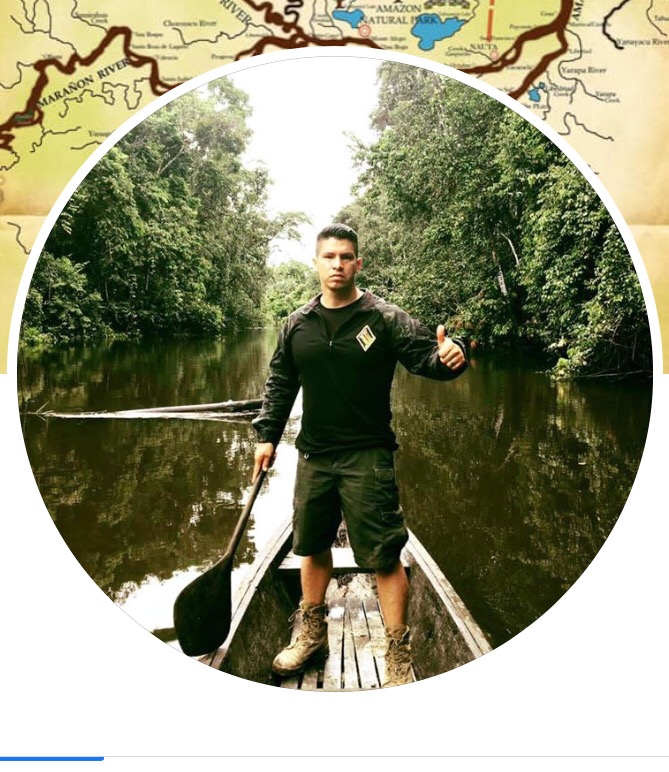
At Amazon Expeditioners, our understanding of Indigenous Amazonia did not come overnight. It developed through years of exploration, conversations, mistakes, friendships, and learning alongside the people who know the forest far better than we ever could.
And, for me personally, it began with a journey that had very little to do with tourism.
Born Between Two Countries
I was born in the United States, but I grew up in Peru. Both of my parents had Peruvian roots, and I spent most of my childhood here before returning to the United States at seventeen. Later, I joined the United States Marine Corps and spent many years in military service.
When my military career eventually came to an unexpected end through medical retirement, I found myself back in Peru at a point in my life when I needed a different direction.
A Search for Healing
My first connection with the Amazon was not about starting a tourism business, organizing expeditions, or even exploring the jungle. It was personal. I was looking for healing, a way to reconnect with myself, and a different perspective on life.
That search gradually brought me into the Amazon, where I began spending weeks and sometimes months with traditional healers, shamans, and people who worked with medicinal plants and traditional forms of knowledge. I wanted to learn, to listen, and to understand a world that was very different from the one I had known.
I also began exploring my own family history on my mother's side and discovered Kichwa roots in my ancestry. That added another personal dimension to my connection with Peru and its Indigenous heritage, although I have always understood that every people, every territory, and every culture has its own history and identity.
Learning the Rivers With My Father
Over time, something changed. What began as a personal search became a much larger journey of discovery.
I became increasingly fascinated by the forest itself: its challenges, its wildlife, its rhythms, and the knowledge required to live in such an environment. I was drawn to survival, to being outdoors, to learning directly from nature. I wanted to understand how people navigated the forest, found food, tracked animals, recognized useful plants, and adapted to an environment that can be both extraordinarily generous and incredibly demanding.
That curiosity eventually introduced me to another group of teachers: experienced Indigenous forest hunters.
The shamans and traditional healers had introduced me to one dimension of Amazonian knowledge. The hunters opened the door to another. They taught me about tracking, animal behavior, hunting techniques, navigation, forest resources, and the countless details that an experienced person learns only after spending years in the forest. Much of this knowledge is not found in books. It comes from observation, practice, experience, and generations of learning passed from one person to another.
I began spending more time in remote territories, traveling alongside hunters and learning from their everyday lives. Sometimes I went with my father. He had been a navigator of Amazonian rivers since he was young, and he also worked as a trader along those rivers. In my early days, he was my guide on the water — he accompanied me on many of those first journeys and helped me find my way into territories and relationships I would not have reached alone.
2015: Amazon Expeditioners Begins to Take Shape
Eventually, in 2015, Amazon Expeditioners began taking shape.
At first, like many people entering the adventure travel world, I was still figuring things out. I was creating itineraries, imagining experiences, and trying to understand what visitors wanted to see and experience. I had plenty of enthusiasm, but I was also learning that the Amazon was far more complicated than anything I could design on paper.
The more time I spent there, the more I began to question some of the assumptions behind conventional Amazon tourism. I encountered different approaches to cultural tourism. Sometimes visitors were introduced to communities through carefully arranged performances, traditional clothing, ceremonies, or activities designed to match what tourists expected to see. In some situations, the experience seemed to be built around an image of Indigenous life rather than the reality of the people themselves.
I do not say this to criticize every operator or every cultural experience. There are many people working in tourism with good intentions, and every community has its own reasons for deciding what it wants to share with visitors. But I began asking myself a simple question: Are visitors really getting to know Indigenous Amazonia, or are they sometimes getting to know an image that has been created for tourism?
That question changed the way I looked at my own work.
I realized that the Amazon did not need a script. Indigenous people did not need to dress differently, stage their lives, or recreate an imagined past to make an experience meaningful. They should be able to live as they live today, using the tools they choose, maintaining the traditions that matter to them, and adapting to the world around them.
That realization eventually became an important part of the direction Amazon Expeditioners would take.
Why Our Focus Shifted Toward Hunter-Led Expeditions
After years of exploring different parts of the Amazon, I began to understand more clearly what kind of experience I wanted Amazon Expeditioners to offer.
I did not want to build our identity around presenting one particular Indigenous group in traditional clothing or arranging cultural performances for visitors. I wanted to create opportunities for people to spend meaningful time alongside experienced forest hunters, learning about the Amazon through the people who actually know how to navigate and live in it.
This became the foundation of our hunter-led approach.
Around 2020, following the pandemic and a major period of personal reflection, the direction of the company became much more focused. The loss of my father during the pandemic was a profound turning point in my life. It also marked a period when I began looking at the company, its purpose, and the direction I wanted it to take very differently.
Amazon Expeditioners increasingly became what it is today: a company focused on expeditions developed around Indigenous forest hunters and their knowledge.
We work with hunters from different Indigenous backgrounds and territories. We are interested in their real experiences, their skills, their knowledge, and the opportunity to learn alongside them. This does not mean every hunter has the same knowledge, follows the same traditions, or lives in the same way. Each person brings a different background and experience. And that is precisely what makes these encounters meaningful.
We are not trying to create a single image of an Amazon hunter. We are interested in the real people, their individual knowledge, and the realities of their lives today.
Two Ways to Experience the Amazon Alongside Forest Hunters
This philosophy is reflected in the two main expedition programs developed by Amazon Expeditioners.
Coexisting with Hunters is designed for visitors who want to spend an extended period alongside Indigenous forest hunters, experiencing aspects of their daily activities and learning practical skills in a natural environment. These experiences generally last between 10 and 28 days. It is not a staged cultural visit. It is an opportunity to spend time alongside hunters and gain a better understanding of their knowledge and everyday relationship with the Amazon.
Becoming a Hunter is for those looking for a longer and more demanding experience. These programs generally range from four to twelve weeks. The longer duration allows participants to spend more time in the forest, develop practical skills, adapt to the environment, and gain a deeper appreciation of the knowledge required to navigate this way of life. It is not a shortcut to becoming an Indigenous hunter, nor does it promise that a visitor will acquire a lifetime of knowledge in a few weeks. The name reflects the learning journey and the practical challenges involved.
You can also see upcoming shared dates on our Group Departure Calendar.
For the cultural foundations behind this work, read our Cultural Reality & Ethic page and the companion article Indigenous Amazonia Today.
Eleven Years Later: Still Learning, Still Evolving
Amazon Expeditioners began in 2015, and as we enter our eleventh year, I find myself looking at the company very differently from when it first started.
My role has also evolved.
In the early years, I was much more involved in the exploration and development of expeditions in the field. Today, I spend more time supporting the company behind the scenes: coordinating logistics, administration, communication with visitors, and helping our team continue developing and operating the expeditions.
That does not mean the journey has stopped. It means the company has grown, and I have learned that it should not depend on one person being present or directing every moment.
The people who work in the field have their own experience, knowledge, and leadership. My responsibility is increasingly to support the team, maintain the direction of the company, and help create the conditions for these experiences to continue.
I still consider myself a student of the Amazon. Eleven years of working in this environment have taught me a great deal, but they have also shown me how much I still do not know.
Perhaps that is one of the most important lessons.
The Amazon was never ours to reinvent. It was ours to learn from.
Because the Amazon is not a museum, and its people are not part of an exhibit. It is their home, their history, their present, and their future.
— Christian del Cuadro, Founder, Amazon Expeditioners Exploring the Amazon alongside Indigenous forest hunters since 2015.

Comments